Why German hunting dogs?
A breed registry that answers to the hunt, not the show ring.
In North America, "papers" usually mean one thing: the parents were the same breed. That's it. A registration certificate says nothing about whether either parent can find a bird, hold a point, or bring a duck back across cold water. In the German system, papers mean something closer to the opposite — they're the end of a long filter, not the start.
Here's what stands behind a dog from that system.
The club decides who gets bred — not the breeder.
A Deutsch Drahthaar or Deutsch Kurzhaar isn't bred at the owner's discretion. The breed club, under the umbrella of the Jagdgebrauchshundverband (JGHV — the German versatile hunting dog association), sets the conditions, and a dog that doesn't meet them doesn't get bred. Not "shouldn't." Doesn't — the litter won't be registered. Both parents have to clear a defined bar before a mating is even allowed.
That bar includes health, conformation, and proven hunting performance.
To be cleared for breeding, a dog generally has to show three things: a hip evaluation (HD), a conformation rating from a formal show, and — this is the part no Canadian registry requires — a passed hunting test with full water work. Tested ability isn't a bonus on top of the pedigree. It's a precondition for the pedigree to continue at all. The breed's founding motto says it plainly: "Durch Leistung zum Typ" — through performance to type. Performance first. The look follows.
The tests behind a German pedigree come in three stages: VJP, HZP, and VGP — each defined further down the page.
Strict selection means fewer dogs — and that's the point.
Because the bar is real, not every dog passes, and not every dog breeds. The system is built to remove the weak links from the gene pool, generation after generation, rather than let every registered dog reproduce. Fewer dogs make the cut. The ones that do are the ones worth bringing across the Atlantic.
The testing system, in plain terms.
A German hunting pedigree is dense with abbreviations. Three matter most.
VJP — the spring natural-ability test.
Run on young dogs to measure inherited instinct: nose, tracking, search, pointing, and cooperation. It tests the raw material the pup was born with, before much training has happened. A strong VJP says the genetics are there.
HZP — the fall breeding test.
A broader test of a young dog's actual usefulness in field and water: searching, pointing, retrieving, following a duck's scent trail across water, and blind retrieves. This is where "can this dog actually hunt" gets answered.
VGP — the utility test.
The big one. A two-day examination covering roughly two dozen scored areas: blood tracking, fox retrieve, steadiness to wing and shot, independent land and water work, and obedience. A dog that passes the VGP is one a serious hunter can take afield and trust.
When you see a German pedigree where the parents carry HD-frei (clear hips), a conformation rating, and VJP / HZP / VGP scores, you're not reading marketing. You're reading a record that independent judges signed off on.
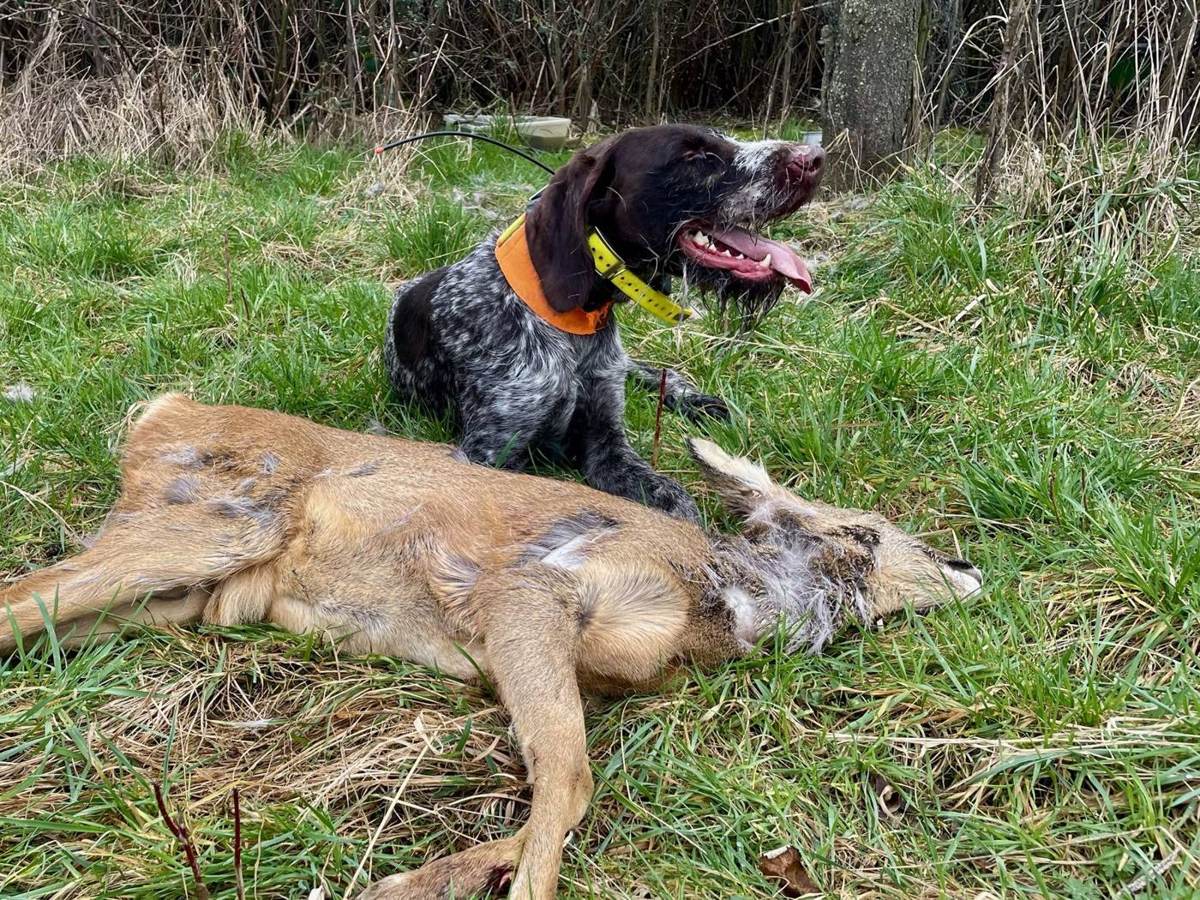
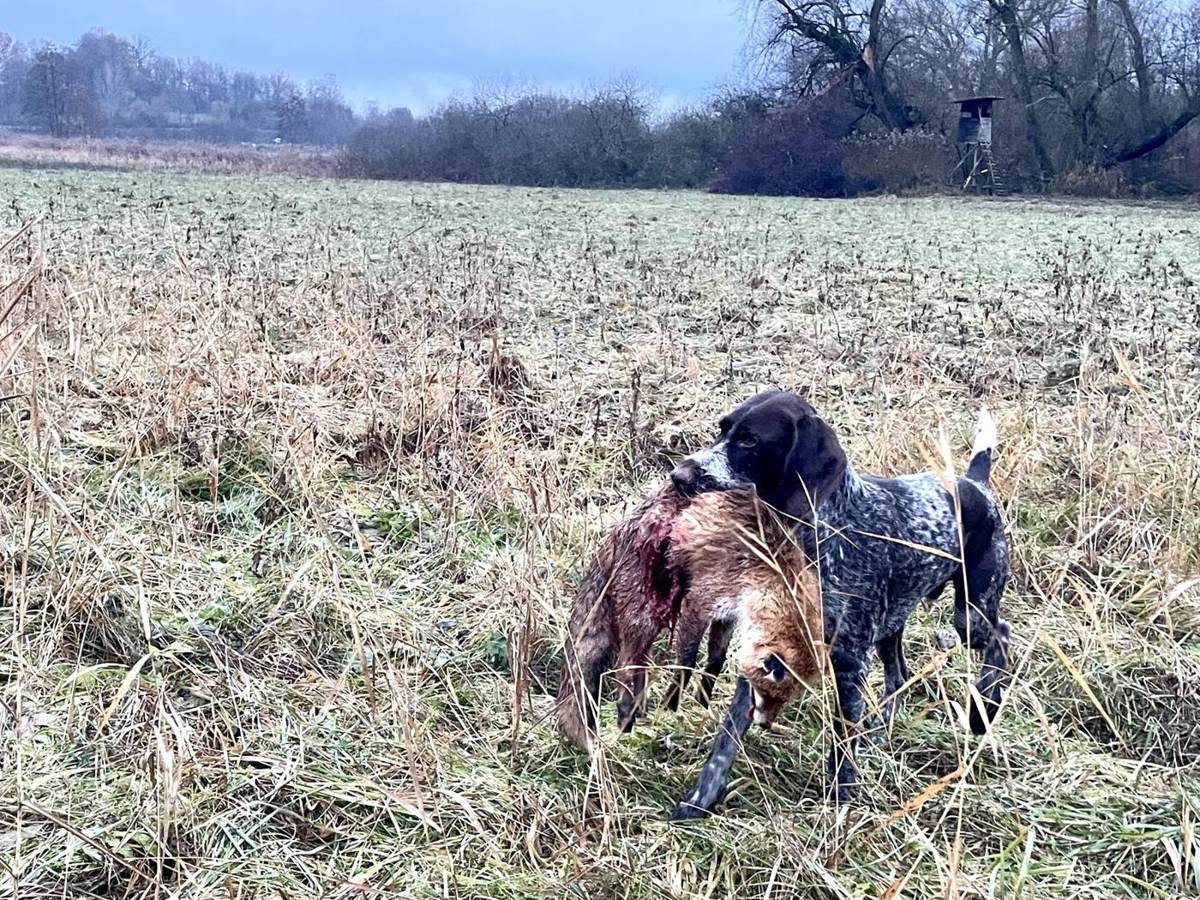
First a hunting dog. Second a companion.
This is the part to be honest about, because it protects both of us. These are working hunting dogs, bred for drive, stamina, nose, and the will to keep going in bad weather and cold water. They make excellent companions for the right home — an active, outdoor home that gives them real work. They are not a low-energy house pet, and a bored versatile dog with no outlet becomes a problem dog. If you hunt, or you'll commit to serious field work and exercise, this is one of the finest dogs you can own. If you want a couch dog, I'll tell you honestly that this isn't your breed — and I'd rather tell you now than sell you the wrong dog.